"As we enjoy great advantages from the inventions of others, we should be glad of the opportunity provided to serve self-interest when Al Gore created the internet; and we should also thank Mark Zuckerburg and Jack Dorsey for creating Facebook and Twitter out of the kindness of their big hearts and not the thinness of their small wallets."
-Ben Franklin, Autobiography (1742)

Friday, April 20, 2012

Kidnapping in the White House?! In 1833?


We have a shocker for you history buffs today - the Lost and Founders recently uncovered evidence that suggests former President Martin Van Buren actually began his term as Vice President to Andrew Jackson in 1833 under duress.

Martin Van Buren, nick-named as a child "The Van Urinator," was a misunderstood man who cam from humble beginnings. Born in New York in 1782 to a wealthy Dutch family, Martin grew up speaking Dutch and according to sources was actually not very good at English. Despite his sheer brilliance in the political arena when he ventured into the realm of politics as a young man in his 30's while attempting to help found the Democratic Party, he initially struggled to gain support from his peers because of his thick accent and tendency to slip into Dutch when nervous or excited. In fact, many members of Congress, including the then-current president John Quincy Adams, were convinced that Van Buren was actually a Dutch spy.

For this reason, President Adams wrote a little-known letter to his successor Andrew Jackson upon leaving office, warning him of potential treachery:

"...keep your friends close and your enemies closer. By this I mean that wily Van Buren gentleman, for he is surely an agent of the Queen or King or whatever they have in the Netherlands."

- J.Q. Adams, 1832.

Andrew Jackson was not a man to take threats lightly. Recent accounts that have come to light now lead us to believe that as a result of this letter, Jackson's supporters kidnapped Van Buren from his New York estate and held him captive for the next several years. During that time, Jackson appointed Van Buren as his Vice President in order to keep an eye on him (Jackson was usually very clever, though this particular scheme was not among his most impressive).

Van Buren served under Jackson for the entirety of his four year term; all while being instructed in proper English and being watched carefully. Despite his failings, he flourished as a VP and was considered by many to be one of the most shrewd politicians of his day. Each night, Jackson would put him to bed saying, "Good work today Martin, I'll most likely kill you in the morning." He never did though, and over the years they became good friends and close confidants, and Van Buren learned much about the ways of pirating and diplomacy from his captor.

At the end of Jackson's term, he is on record as having pulled Van Buren aside and explained his desire for Van Buren to succeed him. He stated that he was mostly sure that Van Buren was probably not a Dutch spy, and that at any rate he was the only man the paranoid Jackson trusted to lead the nation into its next great years. Van Buren, whether under the effects of patriotism or Stockholm Syndrome we will never know for sure, accepted and ran for President with the support of Jackson, ensuring his victory and four years of glory for the United States of America.

Shockingly, Van Buren's tenure was largely considered a failure, ending with the Panic of 1837 for which he was used as a scapegoat and given the new nickname of "Martin Van Ruin."

You can't make this stuff up. History really is stranger than fiction.

Have a good weekend!
The Lost and Founders

Saturday, April 14, 2012

Jefferson's 81st- A Night to Remember and Eleven to Forget


We begin this week’s entry with an apology to our large and loyal base of subscribers. As hundreds of thousands of you will have noticed, this article is being posted a day late. Yesterday marked the 269th Birthday of Thomas Jefferson, and thus, it was difficult to find a solid ten minutes of time where we could escape the merriment and festivities to log on. Here at Lost&Founders we do NOT take Jefferson’s birthday lightly, and while we can’t remember much that went on last night, it is with great pleasure that we announce the recent discovery of letters and primary documents that reveal what is without the doubt the wildest night to have ever been recorded at Monticello. As you probably guessed, we’re clearly referencing the evening of Mr. Jefferson’s 81stbirthday, or, as James Madison eloquently put it “da night waz craaaaaaaay”.

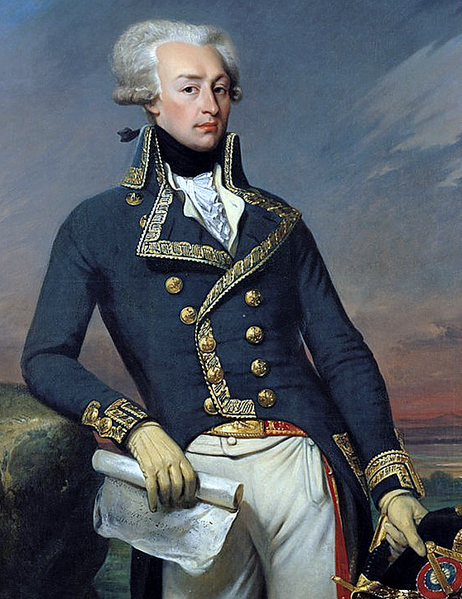
Our story begins with the arrival of Marie-Joseph-Paul-Yves-Roch-Gilbert Motier Lafayette. The Marquis de Lafayette was a national hero, a brave and daring man who was revered as a patriot by Frenchmen and Americans alike. The man was a legend, an international icon, and to Thomas Jefferson, a friend. In 1824, he decided to return to America one last time, making his way to Albemarle on April 1st while birthday preparations were in full swing. We all know the story, two lifelong friends reuniting for the first time in decades, staring at each other from across the vast expanse of lawn at the still unfinished University of Virginia. Jefferson cries “LAFAY-TAFFY” (as he affectionately referred to Lafayette) and rushes over. The Marquis calls back “JEFFY” and races to meet him. The terms “rushes” and “races” are of course relative, being that the two friends were in their early eighties; perhaps the phrase “inched over” is more appropriate. About a half hour later, struggling with walkers and taking frequent breaks to prevent overexertion, the two finally embrace, breaking into tears in what has been described by some as “the most bromantic event to ever grace the pages of American history”.
In a 1789 letter to Francis Hopkinson, Jefferson famously declared, “If I could not go to heaven but with a party, I would not go there at all." For years Jefferson scholars have attributed this quote to the party politics and partisan squabbles of the late 18th century, only recently have we discovered that Jefferson was quite literally trying to hint to Hopkinson that he wanted a surprise party thrown for his birthday. The only thing Jefferson liked more than parties were parties thrown for him. The Marquis de Lafayette knew this and decided he’d throw a “TJ’s B-Day Bash” the likes of which Virginia had never seen. Having served as a Major General in the Continental Army and commanded the French National Guard and having also been a member of the Estates General and the National Assembly, Lafayette assumed that chairing the birthday party committee would come naturally (he was French after all.) Boy was he wrong.

Upon arriving at Monticello, Lafayette was greeted by a woman he had sincerely hoped he’d never have to see again, Dolley Madison. Anyone who has followed our coverage over the past year has become familiar with the reality that the not-so-charming Dolley Madison was in fact a rabid and power hungry fiend bent on dominating her surroundings. TJ’s birthday was no exception. Refusing to allow Lafayette’s “old world tyranny” to permeate what she called her “Republican Rave” she decided that the Frenchman couldn’t be trusted with party planning. Instead, she delegated to him the responsibility of stocking up on alcohol. Lafayette proceeded with his task undaunted, rather than settling for local wine, he pulled strings with the French Embassy, wove an intricate web of contacts who owed him favors and managed to procure a heavy arsenal of the finest French “wine” which was over-nighted via pony express. And so, the festivities began.

Jefferson was pleasantly surprised; guests were streaming in from every state, the hit single “Correspond With Me Perhaps” played on repeat, and everyone was enjoying their wine. Now, it is both necessary and proper to explain that there was a very very big difference between the “wine” of the Marquis and anything the Americans had drank before. This “wine” was actually the precursor to the modern “jungle juice” or “hunch punch” found at fraternity parties across the nation. So the guests drank, and they drank, and they drank and the party was, for lack of a better term, an absolute shit show. The servants report seeing James Monroe pop, locking, and dropping it. They describe the process by which Dolley Madison roundhouse kicked John Quincy Adams, and claim to have witnessed a young General Andrew Jackson attempting to duel with a dairy cow. In the end, the whole thing was just bad. Like really really bad. The guests passed out and spent the next ten days horribly hungover, attempting to recover in the hazy blur of disorder and confusion that bewildered the throng until things finally began clearing up the morning of the 13th. Embarrassed, flustered, and extremely bewildered, our nation’s leadership failed to realize the amount of time that had elapsed. Assuming it was still the second, they had Jefferson blow the candles on his cake and then went on their way.

It is for this reason that we now celebrate Thomas Jefferson’s birthday on the 13th and not the 2nd. Falsely informed intellectuals will attempt to argue that a shift from the Julian calendar to the Gregorian calendar is responsible for the discrepancy, but this “simple” explanation is so obviously an attempt to cover up the embarrassing events of the night of April 1st, 1824 that we’re left picturing our founding father laughing at us while crying “April Fools!”

Happy Founders Day!!!!

Saturday, April 7, 2012

John Adams:On Being Ugly (The Real Samantha Brick Story)

If you haven't seen the Samantha Brick article On Being Beautiful then you have been asleep at the web for the past 4 days.

If you didn't know that she is actually spoofing a 1789 Boston Globe article written by John Adam's called On Being Ugly, then you've been asleep at history for the past 223 years. As always, at Lost and Founders, we like to remind you of the Lost and forgotten history of the world. Please enjoy


On a recent carriage ride to Braintree, I was delighted when a passing vagrant came over and gave me a shilling. ‘This is from me’ he explained. Normally I rob people, but you are so ugly that I figured I should give you something.

You’re probably thinking, ‘what a lovely surprise, nobody wants to be robbed by a vagrant on the ride home, it wasn’t a surprise. At least, not for me.

Throughout my adult life, I’ve regularly had bottles of Madeira sent to my table by pub patrons, once a fellow Congressman even paid for my carriage ride to Philadelphia.

Another time, as I was walking through Boston’s Beacon Hill I was tapped on the shoulder and given some flowers on the condition that I hold them in front of my face. Even bar wenches shoo away from me when I try and present them with money at the mere thought of touching me.

And whenever I’ve asked what I’ve done to deserve such treatment, the donors of these gifts have always said the same thing: my appearance and balding hairline has made them want to have me leave their restaurant or travel with someone else.

I’m not tight panted George Washington, I’m short, stout and hedgehoggish, and so I’m often told, a portly-old fat man. I know how lucky I am to be fat, it means that I eat well and can provide for myself. But there are downsides to being old and fat – the main one being that other men hate me for my ability to attain private back room dining locations where no one is privy to my conversations.

If you’re a gentleman reading this, I’d hazard that you’ve already formed your own opinion about me – and it will probably raise your self-esteem. For while many back door exits have been opened (literally) as a result of my looks, just as many have been metaphorically slammed in my face – and usually by my own sex.

I’m not smug and certainly not a flirt, do you really think pick up lines would work with this receding hairline?. I’ve been dropped by countless friends who felt threatened if I was merely in the presence of their other halves. If their partners dared to look at me a sudden nausea would descent on the room.

And it is not just disgusted wives who have frozen me out of their lives. Secure males bosses have also barred me from promotions at work.

And most poignantly of all, not one dude-bro has ever asked me to be his best-man. Something about being shorter than the Maid of Honor. You’d think we men would help out each other for taking advantage of our appearances. I work at mine – I drink shit tons of beer from my brother Sammy and consume as much roast food as possible, I rarely pass a meal where I don’t succumb to goose pate. Unfortunately men find nothing more annoying than someone else being the most rich and ugly bad ass in the room.

Take last week, out gallivanting in the yard as a neighbor passed by on a horse. I waved – he blatantly blanket me. Yet this is someone whose sons have stayed at my house with little Quincy .

I approached a mutual friend and discreetly enquired if I’d made a faux pas. It seems the only crime I’ve committed is not leaving the house with a bag over my head as he becomes violently ill at the mere sight of my corpulent self.

And, according to our mutual friend, he is adamant that something could happen between his wife and me, ‘were the right circumstances in place.’ Yet I’m happily married and have stopped throwing the raging black out beer orgies where the beer and sex were free.

This isn’t that first time such paranoia has gripped the men around me. In my early 20s, when I first started experiencing early on set hair loss, one male boss in his late 30s would regularly invite me over for dinner after a long day in the office.

I always accepted his invitation, as during office hours we got along famously. But one evening her partner was at home. We were all a couple of glasses of Madeira into the evening. Then she and I said that we both liked Handel’s Watermusic.

He laid into her bewildered partner for ‘fancying’ me as a safer choice for a mate, then turned on me, calling me a fat, loquacious, corpulent, putrescent fur-ball before ridiculing me for not dying my hear and wearing make-up to cover my various lesions. I declined any further invitations.

Therapist Benjamin Franklin, author of the self-help guide 'Drink Beer: Forget Everything', says that men have always measured themselves with rulers.

‘Many of my clients are models, yet people are always astounded when I explain that use the same rulers that we all do.’ He says. If you measure up other men think you lead a perfect life – which you simply can’t determine because of thick woolen clothing.

‘They don’t realize that you are equally endowed by the creator.’

I certainly found that out the hard way, particularly in the office.

One contract I accepted was blighted by a jealous male boss. It was the height of summer and I’d opted to wear knee length knickers and frill-less dress shirts. They were modest, yet showed my explosive belly; more William Howard Taft than Abraham Lincoln if you will. But my boss pulled me into his office and informed me that my dress style was distracting to her female employees. The food crumbs that collected in my pants and the buttons that burst on my shirt seemed to distract our female secretaries. I didn’t dare point out that other men in the office were spilling food on themselves just like me.

Rather than argue, I worked out the rest of my contract wearing dark colors that hid food spills. It was clear that when you have a male boss, it’s best to let them shine. When you have a female boss, it’s a different game: I have written in the Globe on how I have threatened to flirt with people to get  ahead at work, something many men of my size and stature to do as scare tactics. Men, however, are far more problematic. With one phenomenally tricky boss, I eventually managed to carve out a positive working relationship. But a year in, his attitude towards me changed; the deterioration began when he started to put on weight and realized he would never rival my size and would always be judged to be less of a provider because of it.

We were both employed by a big printing company. One of our female UK chiefs recommended I take the company’s global leadership course, which meant doors would have opened for me around the world. All I needed were two personal recommendations to be eligible. As everyone in the office agreed I was good at my job, I didn’t think this would be a problem.

But while the female executive signed the paperwork without hesitation, my immediate boss refused to sign. When I asked his right-hand man why, he pulled me to one said and explain that my boss was jealous of my portliness.

Things between us rapidly deteriorated. Whenever I wore something worse he’d pooch out his belly in front of other colleagues showing that he was the star, not me.

Six months later I handed in my notice. Privately he begged me to stay, blaming the nasty comments on his lack of goose liver pate. He was in his early 40s and confided that he was having marital problems. But by then I’d had enough. I find that older men are the most hostile to fat young-un’s like me. Perhaps they feel their own sagging flesh and wish they could distend their bellies in the same way. Because my wife is ten years older than me, her social circle is that bit older too.

As an American, she takes great pride in hearing other men declare that I’m quite ugly and always tells me that she knows I couldn’t get another woman if I tried.

Yet I dread the inevitable snarky comments. ‘Here he comes. We’re in a peaceful little village and were about to experience an earthquake,’ was one I recently overheard. As a result I find dinner parties and social gatherings fraught and if I can’t wriggle out of the door, I often have to make sure and eat less for weeks in advance.

But even those ploys don’t always work. Take last summer and a birthday party I attended with my wife. At one point the host, who was celebrating her 50th, decided he wanted a photo with all the male guests. Positioning us, the photographer suggested I stand to the far outside right of the shot.

Another man I barely knew pushed me out of the frame, shouting that I would break the camera and it wasn’t fair to everyone that I would thus dominate the shot. I was devastated and burst into tears. On my own in the loo I ate 12 donuts as ol’ Tommy J snuck in some cold milk.

So now I’m 41 and probably one of very few men entering his fifth decade and welcoming the decline of my looks. I can’t wait for the wrinkles and the greys that will help earn me more private dining experiences and offers of wine to take my food home and eat in the auspices of my own dining room.

Perhaps then the brotherhood will finally stop judging me so harshly on what I look like and instead accept me for who I am.

Friday, March 30, 2012

Andrew Jackson: On the Etymology of Ass-Hat

This past week President Obama made a visit to Las Vegas to discuss clean energy. We here at Lost and Founders realized that we have been doing a piss poor job of discussing the alternative energy missions of some of our early Presidents. Today we would like to tell you the story of Andrew Jackson, nicknamed 'Old Hickory' for his green thumb and and love of the environment. To set the stage the first thing that we have to realize is that things were a little bit different in the 1830's. We all know that rainbows were invented in the Venetian Dyeing Guilds during the 1400's, but we had  yet to domesticate the pink-hued Unicorn that Obama rides into meetings.


Old Hickory had an obvious hatred for the Second Bank of the United States of America. He wanted to create a way for the economy to flourish, but also wanted to disguise this idea as a simple piece of alternative energy legislation. He designed the poorly named D.E.B.T Project. DEBT was known as Dam, Energy, Beaver Trade. The idea was simple, dam the Mississippi River create a hybrid beaver, donkey breed to inhabit the region and harvest the animal to further support the American Fur Company and satiate England's desire for beaver top hats. His thought was that by creating a hybrid beaver/donkey they would have an animal that would have larger pelts and thus create more fur. Damming the Mississippi would create the habitat and passage of the bill could be framed as a way to create alternative forms of energy by diverting the river for numerous watermills.
Jackson talked to Lewis and Clark and had them do some potential drawings of a hybrid Beaver
Donkey:


The drawings combined with support from the Watermiller's of America would allow the proposal fly through Congress.  Jackson was very wrong. He immediately became the butt of every joke in Washington DC. His idea for a cross-species hybrid was met with much skepticism and he became known as Old Hickory Ass-Hat. This phrase, of course, became poplar as it hit all of blogs and people began posting leaflets on other people's doors that labeled them as Ass-Hats. The truly unfortunate bystander to this entire debacle was the American Fur Company. Due to the public joking beaver hats quickly became unpopular and people detagged their daguerreotypes. The company failed and Jackson finished his tenure as President.


Friday, March 23, 2012

The Founder Games


All the cool people know about The Hunger Games - currently an extremely popular novel by Suzanne Collins that is being brought to the big screen starting today, March 23rd, 2012. The brilliantly crafted work of semi-fiction takes place in a post-apocalyptic USA controlled by a disturbingly callous empire. This empire's primary form of twisted entertainment just happens to be an annual,  nationally televised fight to the death among a handful of unwilling children, taken at random each year from each of the country's twelve poor districts. The protagonist, Katniss Everdeen, is a teenage girl living in one such district who volunteers to take her sister's place in the tournament even though it almost certainly means her own gruesome death for the sake of higher television ratings. That brief synopsis is all we'll say about the story, since by virtue of it having won several awards and sold countless copies since it was first published in 2008, we're guessing most of you have already read it and those of you who haven't will be going to see the movie very soon. However, what you probably don't already know about The Hunger Games and what the Lost and Founders will happily import is that the author actually got her inspiration from one of the darkest and most fascinating spectacles in American History: The Founder Games. True Story.

The year was 1876 and the race for the US presidency had become in the last several years pretty stale. The Democratic and Republican parties that have now become the most established factions in the US political system were during this period first beginning to truly establish themselves as representations of the popular opinions of the states, or districts as they were often referred to in the vernacular of the day, but no one outside of Congress and the party leaders really cared about who would be the next president. The four candidates for the 1876 election were thus once again chosen by the Electoral College at random from all districts (This practice had started in the previous election and was discontinued after the 1880 election of James Garfield who was shot by a deranged fan who was unhappy with the outcome of the race). For the Democrats - Samuel Tilden and Thomas Hendricks where chosen, and for the Republicans - Rutherford Hayes and William Wheeler.


This is where it gets interesting. Congress decided that since there were no major political crisis at the time that they would spice things up for a more exciting election season. Rather than waste time and money with an actual democratic process, the first and only Founder Games was declared in secret as a non-fatal contest between the four candidates to ensure that the next president was both a shrewd politician and in possession of enough military prowess to keep the growing nation safe. The idea was that all four candidates would be given their choice of weapon and the last man standing would be granted the presidency before a second round of games would be played to choose the Vice President. The results would then be chronicled for the public and published in the Farmer's Almanac.

Hayes chose slingshot as his weapon of choice since truly lethal weapons were prohibited, and he quickly made an alliance with Wheeler at the start of the games, who sported a rope with a knot on the end. Tilden and Hendricks also teamed up, choosing a large stick and a cat as their weapons, respectively. The battle royale was fought in an unnamed forest in southern Pennsylvania, which at the time was largely underpopulated and extremely treacherous terrain.

The Founders Games lasted for 6 days; culminating when Hendricks was knocked unconscious by a blow to the head from Hayes' slingshot, and Tilden surrendered due to a nasty bout of food poisoning from the local fauna. Tensions mounted when it was realized that the alliance between Hayes and Wheeler would succumb to betrayal as announcers from the Electoral College confirmed that only one of them would be allowed office. However, at the last possible second through a masterful powerplay by Hayes, both men were declared mutually victorious.

Editors note: We will refrain from explaining exactly how that happened, because it is exactly the same as the ending to the Hunger Games. Let it never be said that the Lost and Founders spoil endings.

Needless to say Hayes was elected President and Wheeler his Vice President, though it was decided almost immediately by Congress that the entire affair was in poor form and should never be announced to the public. So it stands that 1876 was one of a small handful of elections throughout American history that were not decided through a real democratic process. In order to cover up the sordid affair, a web of half truths was quickly disseminated though the media that resulted in most Americans individually believing that they slept through election day but that everyone around them must have voted and it was really close.  So close in fact that a controversial compromise had to be made that in effect ended Reconstruction and put the Republicans in office. It seemed pretty plausible at the time so most people were ok with it and glossed over the major inconsistencies in the story. Television had also not been invented yet so no one outside of Congress and a park ranger in Pennsylvania had any way of knowing that the games took place.

Fast-forward to 2008 and in the Hunger Games we have another shining example of the Founders' inspiration on American literature and culture thanks to Suzanne Collins' careful study of history. We encourage you to think about that as you flock to theaters this weekend - because if not for Rutherford B. Hayes and Samuel J. Tilden, there would be no Katniss Everdeen.

Friday, March 16, 2012

Downton Abbey: Not that British after all

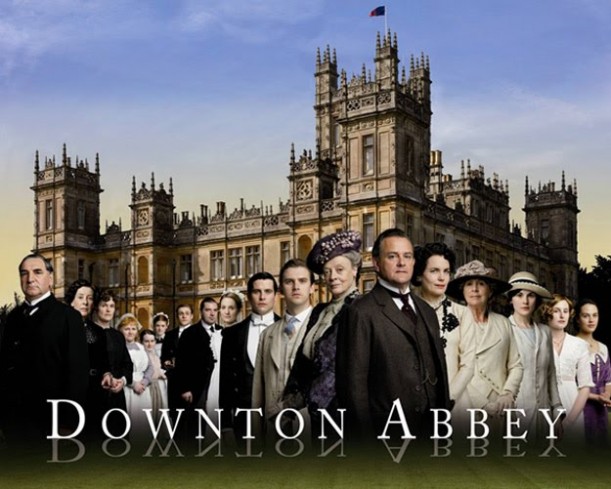
Like you, we've been getting an ear full lately about the popular PBS series, Downton Abbey. For weeks we at Lost and Founders resisted committing to another TV show (Hoarders, Hillbilly Handfishin' and 16 And Pregnant already take up a solid 90 minutes of our weeks). But, we finally caved to all this Post-Titanic Dowager Countess Upstairs Downstairs talk and watched Season 1. We thought it might be a good opportunity to brush up on our British history. We were wrong.


Somewhere after Maggie Smith's character learned the meaning of the word "weekend", the plot lines started sounding quite familiar. We suddenly realized that these gripping tales were (unsurprisingly) borrowed from American history. Downton creator Julian Fellowes based his "Masterpiece" off the life of our very own Founding Mother, Abigail Adams (of course her nickname Abbey is misspelled in the show's title...one of the only truly British aspects of the show). While Fellowes assumed that setting his series a century ahead would prevent viewers from catching on, it's clear to any Abby expert that she and Downton have a lot in common.


All you Downton followers know that the whole series revolves around Lady Mary's dramatic love life and inevitable romance with her distant cousin, Matthew Crawley, a commonplace lawyer. Un-coincidentally, Abigail's husband, our Founding Father John Adams, was also a lowly lawyer; and, Abby's aristocratic family had similar qualms about her dating down, that is until realizing it was politically strategic for them. Maybe Lady Mary and Cousin Matthew haven't officially gotten together yet on the show, but *SPOILER ALERT* the history books tell us it's bound to happen in Season 3.

Abigail Adams was also a huge proponent of women's rights, much like Lady Sybil, and even sported a pants suit from time to time. In addition, she advocated against slavery and treated her downstairs servants like close family; so close, she even allowed them to prepare meals, sleep in the cellar, and go to war. Though we could be wrong (but probably not), it doesn't seem that Abigail has much similarity to that middle sister on Downton. What's her name again? We've determined she's just a decoy character used to draw attention away from the direct correlations between Downton and the real Abby. 


Of course we could go on citing all the obscure resemblances, but we'll leave what's to come in Season 3 a mystery for you. However, if you can't wait three years 'til Downton returns to find out if the heir Patrick Crawley comes back from the dead, we'll give you a clue: he doesn't. And the beloved estate will stay near and dear to Lord and Lady Grantham. Dying to know more? Just check out a biography of Abigail Adams. Or rewatch Gosford Park.


Friday, March 9, 2012

Millard Fillmore: The Man, The Legend

Perhaps the most illustrious man to ever call 1600 Pennsylvania Avenue home, Millard Fillmore is undoubtedly our nation’s most notable and well-loved president. His story, near and dear to every red-blooded American heart, is one we have all grown up with, and one we cherish as an endearing and defining chapter of Americana. When sorting through his innumerable achievements and accomplishments and through his countless contributions to the America we know and love, it is difficult to differentiate between the myth, and the fact. When working with as popular, iconic, and prolific a man as Fillmore, the task becomes that much harder. Thanks to recent historical breakthroughs, strenuous archeological scrutiny, and the steadfast devotion of Fillmore scholars from around the globe, Lost and Founders has finally managed to compile all of Millard’s most significant achievements into one conclusive piece. For the first time ever, we present Millard Fillmore: The Man, The Legend.

On January 7th, 1800 Millard Fillmore was born to poverty in a log cabin deep in the wilds of upstate New York. A personification of the American Dream, he struggled to make ends meet while coping with hunger, cold, and the inescapable reality that he was uneducated mountain trash. While we often attribute log cabin upbringings to Lincoln, dating suggests that Abe, who was born nine years later, was simply a wannabe trying to fit into the big shoes left behind for him by Fillmore. At the age of 26 Millard would marry his schoolteacher, a fiery redhead by the name of Abbey Powers, who by early-nineteenth-century standards was considered a total babe (though modern criteria place her smugly in the so-so category).

In 1849, all of Millard’s many qualifications and past political experiences (mainly the fact that he was born in the North and could balance Zachary Taylor’s ballot geographically) finally paid off, landing him the Vice-Presidency and ushering in the period many scholars consider to be his prime. Overwhelming amounts of evidence have recently surfaced, suggesting to historians that this was a time of unprecedented popularity for Millard who was affectionately described as colorless, bland, and lacking a backbone by his closest friends and contemporaries.

For superstitious and unfounded reasons, the number thirteen carries the connotation of being considered “unlucky”. This clearly mattered very little to the pragmatic Millard Fillmore who became the 13th President of the United States not by election but by the very lucky death of Zachary Taylor who luckily contracted a severe case of bilious diarrhea after luckily binging on unwashed cherries. The rest is history.

Over the next three years, Fillmore would cement his place in the American Pantheon. His Compromise of 1850 brought lasting peace and domestic harmony to a divided nation, his blatant support for the institution of slavery garnered respect and admiration from all over the world, his racist and unfeasible attempt to recolonize African-Americans fostered a great sense of pride that has continued to define the very fabric of America. The valor and gallantry of his character is embodied in his actions, to illustrate one has only to look at the inauguration of his successor Franklin Pierce. During this grand occasion, Fillmore commanded his loving wife to wait outside in the cold January morning. That night she developed pneumonia and went on to die shortly after. He was a true gentleman, a die-hard patriot, and deserves every bit of recognition he gets in modern American society.